
Ultrasound Machines: Essential Imaging Technology for Accurate Medical Diagnosis
In modern medical science, the ultrasound machine has become one of the most important diagnostic tools for examining the internal structures of the human body. An ultrasound machine uses high-frequency sound waves to create real-time images of organs, tissues, and blood flow without exposing patients to radiation. Because of its safety, accuracy, and non-invasive nature, ultrasound technology is widely used in hospitals, diagnostic centers, and specialized medical clinics.
Ultrasound examinations are commonly recommended for evaluating abdominal organs, monitoring pregnancy, assessing the heart, detecting tumors, and examining soft tissues. Physicians rely on ultrasound imaging to identify conditions such as liver disease, kidney stones, gallbladder disorders, cysts, and fluid accumulation. In obstetrics, ultrasound plays a crucial role in monitoring fetal growth, checking heartbeat, and ensuring the overall health of both mother and baby throughout pregnancy.
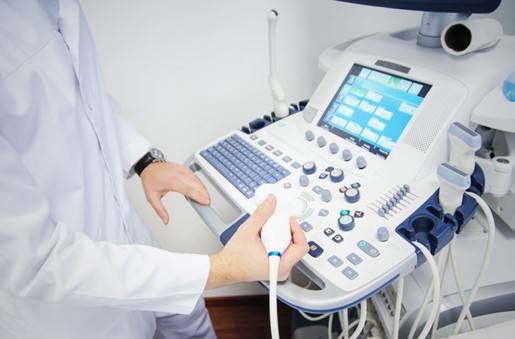
The ultrasound procedure is simple, painless, and usually completed within a short time. During the examination, a trained medical professional applies a special gel to the patient’s skin and moves a handheld probe called a transducer over the area being studied. The probe sends sound waves into the body and receives the echoes reflected from internal structures. These signals are instantly converted into clear visual images on a monitor, allowing doctors to make fast and accurate clinical decisions.
One of the greatest advantages of ultrasound machines is their complete safety profile. Since the technology does not use ionizing radiation, it is considered safe for repeated use, including in pregnant women and children. In addition, modern ultrasound systems provide high-resolution imaging, Doppler blood-flow analysis, and advanced measurement tools that significantly improve diagnostic confidence and treatment planning.
Another important benefit of ultrasound technology is its versatility. Ultrasound machines can be used for abdominal scans, cardiac imaging, vascular studies, musculoskeletal evaluation, gynecological assessment, and emergency bedside diagnosis. Portable ultrasound devices now allow healthcare providers to deliver rapid imaging services even in remote areas, ambulances, and critical care environments, improving access to quality medical care.
Like any medical equipment, ultrasound examinations may have minor limitations depending on the patient’s body condition or the organ being examined. In some cases, excessive body fat or intestinal gas can reduce image clarity. However, continuous technological advancements have greatly enhanced image quality, probe sensitivity, and diagnostic accuracy, making ultrasound one of the most reliable imaging methods available today.
In summary, the ultrasound machine is an indispensable component of modern healthcare. Its ability to provide safe, real-time, and highly accurate imaging supports early disease detection, effective treatment planning, and improved patient outcomes. As medical technology continues to evolve, ultrasound systems will remain a cornerstone of diagnostic medicine, helping healthcare professionals deliver faster, safer, and more precise care to patients worldwide.

