
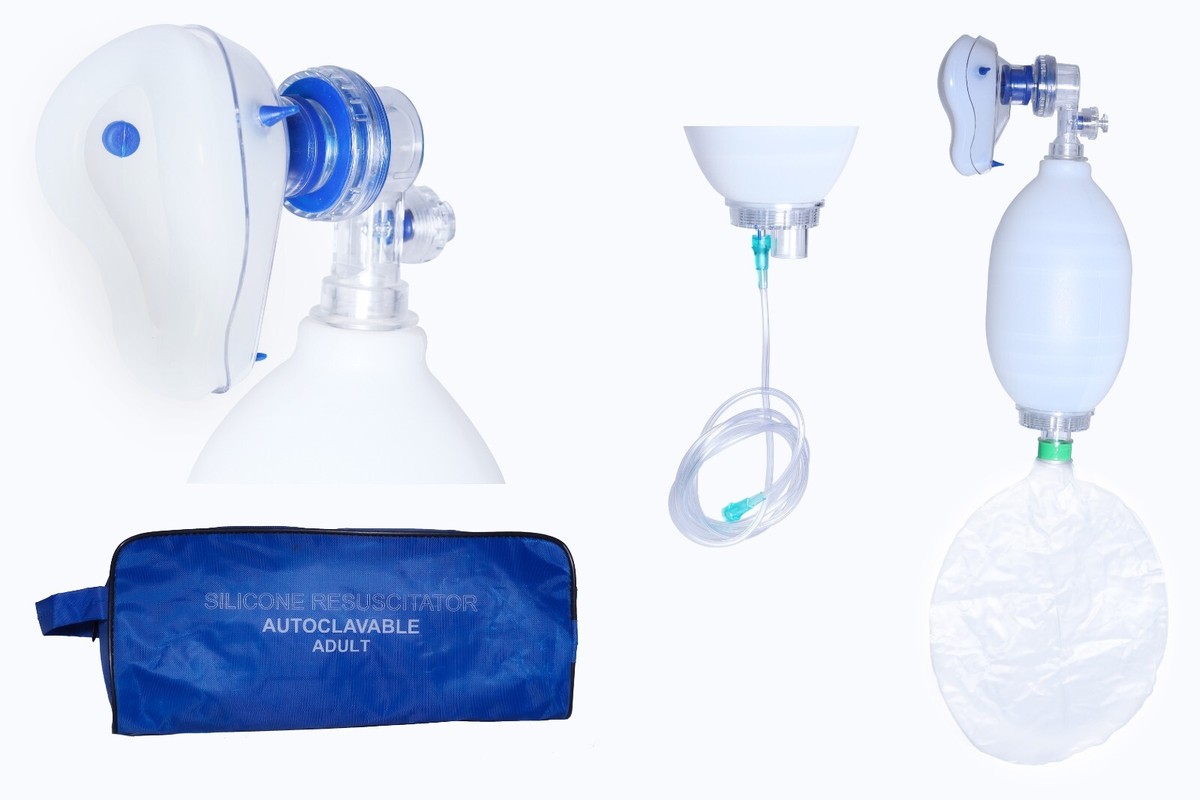
Silicone autoclavable Ambu type bags are reusable manual resuscitators designed to provide immediate breathing support to patients who are not breathing adequately or have stopped breathing. Commonly known as manual resuscitation bags or bag-valve masks (BVM), these devices are widely used in hospitals, ambulances, emergency rooms, intensive care units, and during patient transport. Their primary function is to deliver positive pressure ventilation by manually squeezing the bag to push oxygen-rich air into the patient’s lungs.
These Ambu type bags are made from high-quality medical-grade silicone, which makes them durable, flexible, and safe for repeated clinical use. Unlike disposable PVC resuscitators, silicone versions can withstand high-temperature sterilization in an autoclave. This autoclavable property allows healthcare facilities to reuse the device multiple times while maintaining strict infection-control standards, making it both cost-effective and environmentally friendly.
A typical silicone autoclavable Ambu bag system includes several key components. These usually consist of a self-inflating silicone resuscitation bag, a patient valve, an oxygen reservoir bag, oxygen tubing, and compatible face masks in different sizes. Some models also include pressure relief valves and positive end-expiratory pressure (PEEP) valve connectors to enhance ventilation safety, especially for infants and children. The transparent patient valve design helps clinicians observe airflow, secretions, or blockages during resuscitation.
Silicone Ambu bags are available in adult, pediatric, and neonatal sizes to ensure proper ventilation for patients of all age groups. The soft and elastic silicone material allows quick recoil after compression, ensuring consistent oxygen delivery with each manual breath. Textured bag surfaces improve grip, which is especially important during emergency situations when rapid and controlled ventilation is required.
One of the major advantages of silicone autoclavable Ambu type bags is long service life. They resist cracking, deformation, and chemical damage even after repeated sterilization cycles. This durability reduces long-term replacement costs for hospitals while maintaining reliable clinical performance. Additionally, being latex-free minimizes the risk of allergic reactions in both patients and healthcare workers.
Proper cleaning, disinfection, and autoclaving procedures are essential to ensure patient safety. Healthcare staff must follow manufacturer guidelines for temperature, pressure, and sterilization duration. Regular inspection for wear, valve function, and airtight sealing is also necessary before reuse in clinical settings.
In conclusion, silicone autoclavable Ambu type bags are essential life-saving respiratory devices used for manual ventilation in emergencies and critical care. Their reusable, sterilizable, and durable design makes them a practical and economical choice for healthcare providers. By delivering rapid and effective breathing support when every second matters, these devices play a crucial role in modern emergency medicine and patient resuscitation.

