
Arthroscopy System: Precision Imaging for Modern Joint Care
The Arthroscopy System is a highly advanced medical technology used to diagnose and treat problems inside the joints through minimally invasive procedures. Widely applied in orthopedics, arthroscopy allows surgeons to visualize, assess, and repair joint structures such as cartilage, ligaments, tendons, and synovial tissue without the need for large surgical incisions. This approach significantly improves patient recovery time, reduces pain, and lowers the risk of complications compared to traditional open surgery.
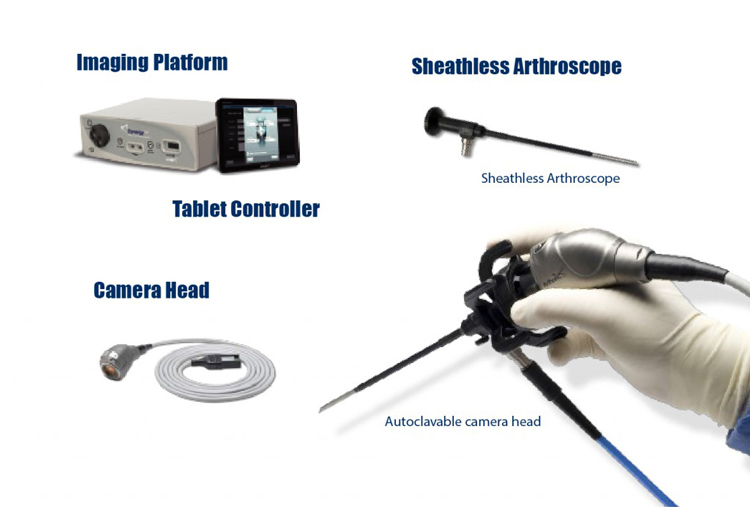
An arthroscopy system typically consists of a high-definition arthroscope (a thin tube with a camera and light), a powerful LED or xenon light source, a camera control unit, fluid management system, surgical instruments, and a medical display monitor. The arthroscope is inserted into the joint through a small incision, transmitting real-time images to a screen that guides the surgeon during diagnosis and treatment. Modern systems often support HD or 4K imaging, providing exceptional clarity and color accuracy for precise visualization of delicate joint structures.
Arthroscopy is most commonly performed on the knee, shoulder, ankle, elbow, and wrist. In knee arthroscopy, surgeons can repair torn meniscus cartilage, reconstruct ligaments such as the anterior cruciate ligament (ACL), or remove damaged tissue. Shoulder arthroscopy is frequently used to treat rotator cuff tears, labral injuries, and joint instability. Because the procedure is minimally invasive, patients usually experience less postoperative pain, smaller scars, and faster rehabilitation compared to conventional surgery.
One of the major advantages of an arthroscopy system is its dual diagnostic and therapeutic capability. Surgeons can not only identify joint abnormalities but also perform corrective procedures during the same session. Tasks such as trimming damaged cartilage, removing loose bodies, repairing ligaments, or reducing inflammation can all be completed using specialized arthroscopic instruments. This efficiency shortens hospital stays and reduces overall treatment costs.
Patient safety and surgical precision are further enhanced by modern technological features. Advanced image processing, improved illumination, and ergonomic instrument design allow surgeons to work with greater control and accuracy. Fluid management systems maintain a clear visual field within the joint, while sterile, single-use or properly sterilized components help minimize infection risk. Many systems also support digital recording for clinical documentation, training, and post-procedure evaluation.
Recovery following arthroscopic surgery is generally quicker than open procedures. Many patients return home the same day and begin rehabilitation shortly afterward. Physical therapy plays a key role in restoring joint strength, flexibility, and long-term function. Early treatment through arthroscopy can also prevent further joint degeneration and delay or avoid the need for joint replacement surgery.
Despite its many benefits, successful outcomes depend on skilled surgical expertise, appropriate patient selection, and proper postoperative care. As technology continues to evolve, arthroscopy systems are becoming even more precise, portable, and user-friendly—expanding access to high-quality orthopedic care.
In conclusion, the Arthroscopy System represents a major advancement in minimally invasive joint treatment. By combining high-resolution imaging, precise surgical tools, and faster patient recovery, it has transformed the diagnosis and management of joint disorders. This technology continues to play a vital role in improving mobility, reducing pain, and enhancing quality of life for patients worldwide.

