
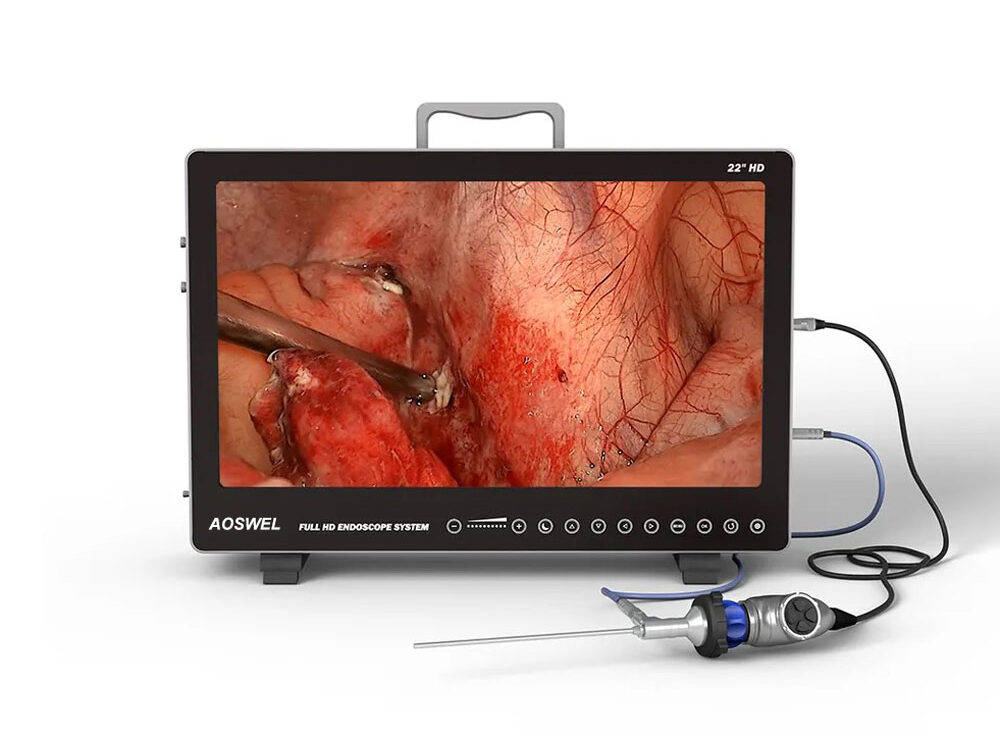
Portable Endoscopy Imaging System: Bringing Advanced Diagnostics to Every Clinical Setting
The Portable Endoscopy Imaging System represents a significant advancement in modern medical technology, designed to deliver high-quality internal visualization in a compact and mobile format. Unlike conventional endoscopy units that are fixed within hospital procedure rooms, portable systems allow healthcare professionals to perform diagnostic and minor therapeutic procedures in diverse environments such as outpatient clinics, emergency rooms, rural health centers, and even bedside in intensive care units. This mobility greatly expands access to timely and accurate diagnosis.
A typical portable endoscopy imaging system integrates several essential components into a lightweight, user-friendly design. These usually include a compact high-resolution camera control unit, an LED light source, a medical-grade display or tablet interface, image processing software, and compatibility with flexible or rigid endoscopes. Many modern systems also feature built-in recording, image capture, USB or wireless data transfer, and rechargeable battery operation, enabling uninterrupted performance even in locations with limited infrastructure.
One of the most important benefits of portability is rapid clinical response. In emergency or critical care situations, transporting a patient to a fully equipped endoscopy suite may be risky or time-consuming. A portable system allows physicians to perform immediate visualization of the gastrointestinal tract, airway, or other internal structures directly at the patient’s bedside. Early detection of bleeding, obstruction, infection, or foreign bodies can significantly improve treatment outcomes and reduce complications.
Image quality has improved dramatically in recent years. Many portable endoscopy systems now support HD or even 4K resolution, advanced color enhancement, and digital image optimization technologies. These features help clinicians identify subtle mucosal changes, early inflammation, polyps, or suspicious lesions with clarity comparable to traditional full-size systems. As a result, portability no longer means compromising diagnostic accuracy.
Another key advantage is cost-effectiveness. Portable systems typically require less installation space, lower power consumption, and reduced maintenance compared to conventional endoscopy towers. This makes them particularly valuable for small hospitals, diagnostic centers, military medical units, and outreach healthcare programs in remote or underserved regions. By lowering infrastructure barriers, portable imaging technology contributes to more equitable healthcare delivery.
Ease of use is also central to the design. Touchscreen controls, intuitive software interfaces, and quick-connect endoscope ports allow medical staff to set up and operate the system efficiently. Many devices support secure digital storage and integration with hospital information systems, enabling smooth documentation, telemedicine consultation, and long-term patient record management.
Despite its many benefits, proper sterilization, handling, and operator training remain essential to ensure patient safety and accurate diagnosis. Regular maintenance and adherence to infection-control protocols are critical for reliable long-term performance.
In conclusion, the Portable Endoscopy Imaging System is transforming the way internal diagnostic procedures are delivered. By combining high-quality imaging, mobility, affordability, and ease of use, it enables faster decision-making and expands access to essential medical care beyond traditional hospital settings. As healthcare continues to move toward patient-centered and decentralized models, portable endoscopic technology will play an increasingly important role in improving global diagnostic capability and clinical efficiency.

