
CT Scanners: High-Precision Imaging for Advanced Medical Diagnosis
In modern medical practice, accurate and rapid diagnosis is essential for effective treatment and patient safety. One of the most powerful imaging technologies used worldwide is the CT scanner, also known as computed tomography. A CT scanner combines advanced X-ray technology with computer processing to create detailed cross-sectional images of the body’s internal structures. These high-resolution images allow physicians to detect diseases, injuries, and abnormalities with exceptional clarity and precision.
CT scanning is widely used in hospitals, trauma centers, and diagnostic facilities to evaluate the brain, chest, abdomen, bones, blood vessels, and soft tissues. Doctors rely on CT imaging to diagnose conditions such as tumors, internal bleeding, infections, fractures, stroke, lung disease, and organ damage. Because CT scans provide more detailed information than standard X-rays, they play a critical role in emergency medicine, surgical planning, and cancer detection.
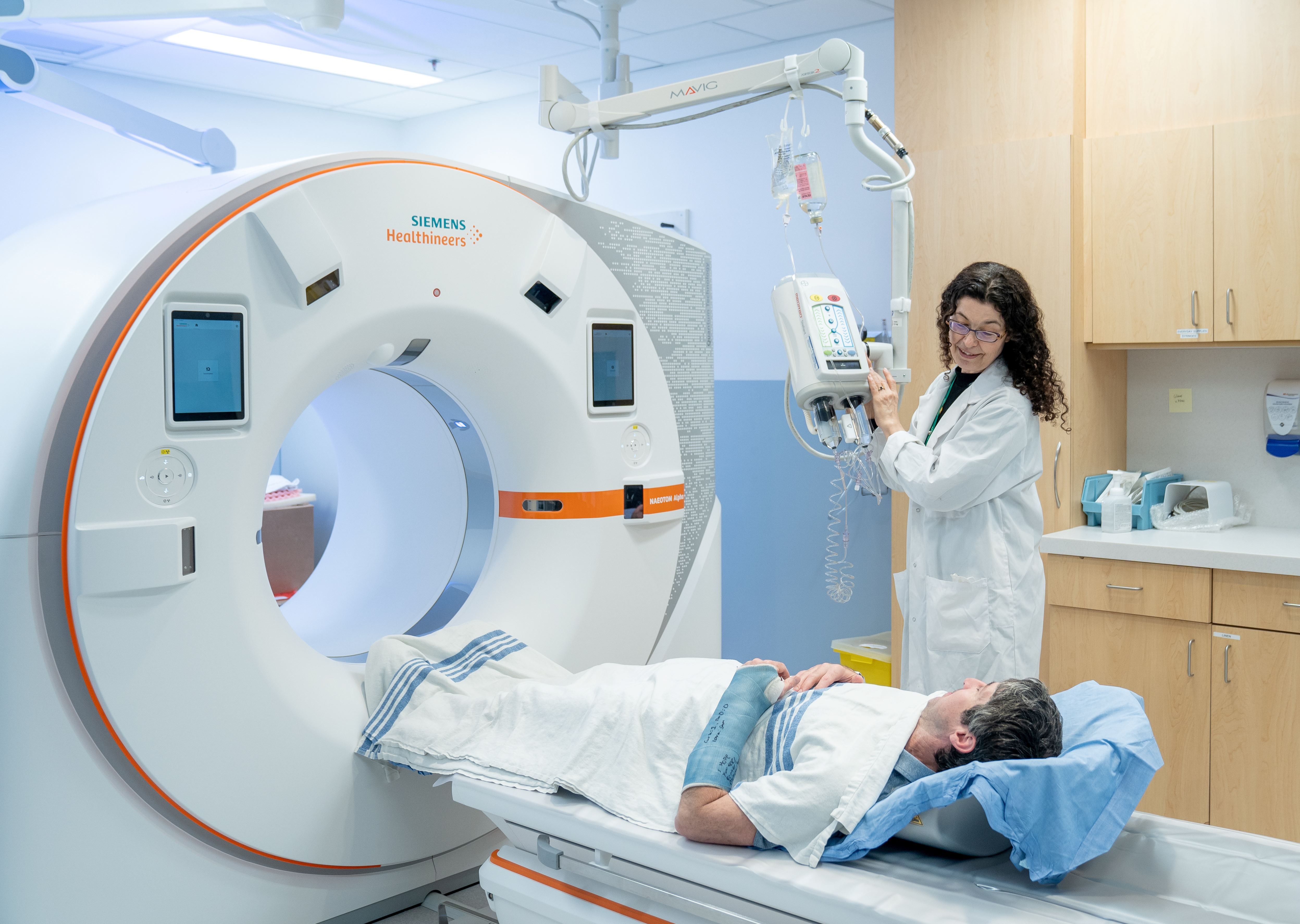
The CT scan procedure is fast, painless, and non-invasive. During the examination, the patient lies on a motorized table that moves slowly through a circular scanning gantry. As the scanner rotates, it captures multiple X-ray images from different angles. A powerful computer then processes these images to generate clear cross-sectional views or three-dimensional reconstructions of the targeted body area. Most CT scans are completed within a few minutes, making the technology highly efficient for urgent diagnosis.
One of the major advantages of modern CT scanners is their ability to produce extremely detailed images in a very short time. Advanced features such as multi-slice imaging, spiral scanning, and contrast-enhanced studies allow physicians to visualize blood vessels, detect tiny tumors, and assess organ function with remarkable accuracy. These innovations significantly improve diagnostic confidence and help guide appropriate medical or surgical treatment.
CT scanners are also essential in monitoring disease progression and treatment response. Oncologists use CT imaging to evaluate tumor size, detect metastasis, and measure the effectiveness of chemotherapy or radiation therapy. Similarly, cardiologists and neurologists depend on CT scans to assess vascular conditions, stroke risk, and structural abnormalities within critical organs. This makes CT technology a cornerstone of comprehensive modern healthcare.
Although CT scanning involves exposure to ionizing radiation, the dose is carefully controlled and optimized to ensure patient safety. Medical professionals always consider the clinical necessity of the scan, and modern low-dose CT technology continues to reduce radiation exposure while maintaining excellent image quality. The diagnostic benefits of CT imaging generally far outweigh the minimal associated risks.
Like any medical imaging method, CT scanning may have certain limitations, such as reduced suitability for pregnant patients unless absolutely necessary. In some cases, contrast dye is used to enhance image clarity, which requires careful evaluation of patient allergies or kidney function. Despite these considerations, CT scanning remains one of the most reliable and widely used diagnostic tools in medicine today.
In conclusion, the CT scanner is an indispensable technology for precise, rapid, and comprehensive medical imaging. Its ability to detect life-threatening conditions, guide treatment decisions, and monitor recovery makes it essential for hospitals and diagnostic centers worldwide. As imaging technology continues to advance, CT scanners will remain at the forefront of accurate diagnosis and improved patient care.

