
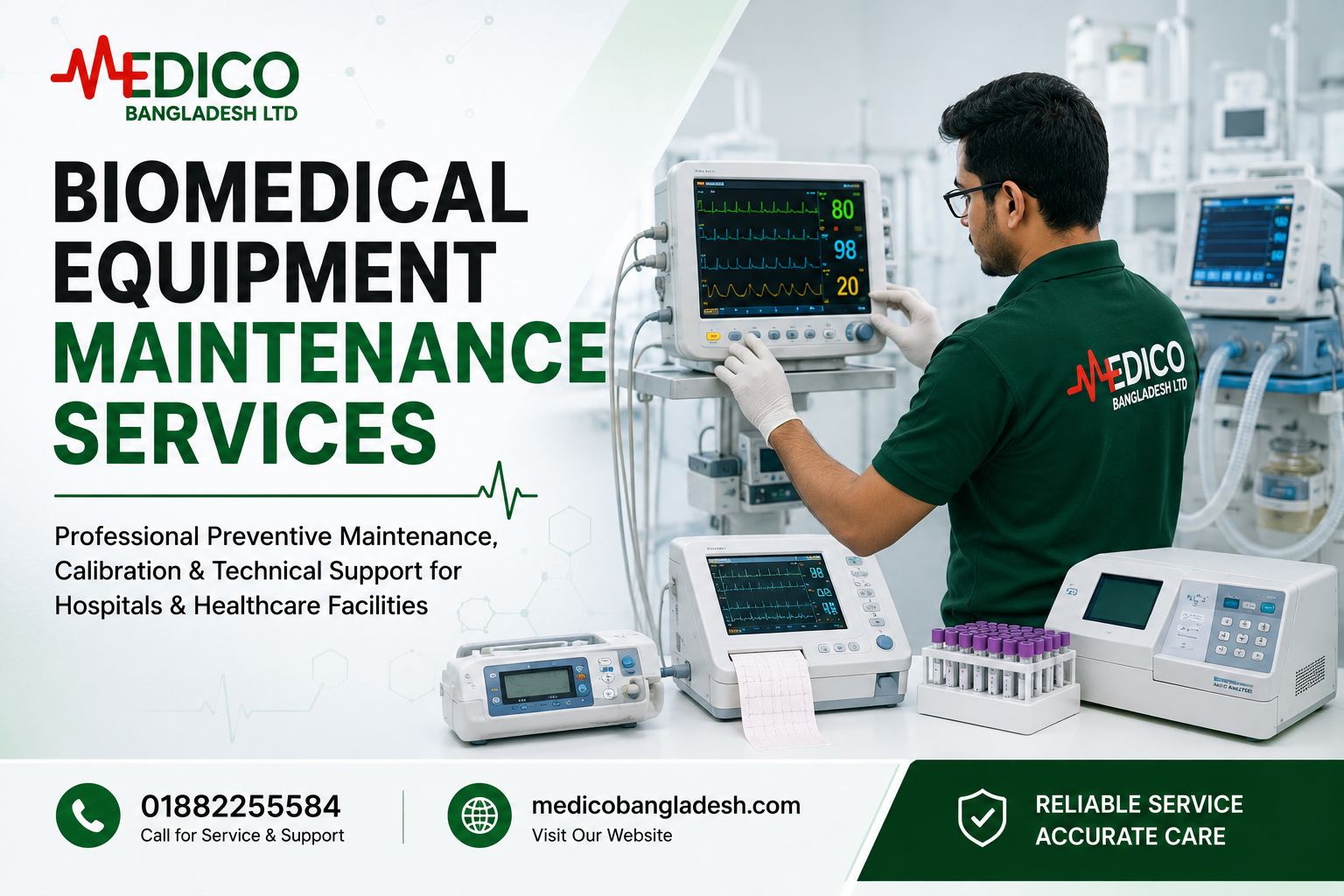
Biomedical Equipment Maintenance Services in Bangladesh: Complete Guide for Hospitals and Healthcare Facilities
Looking for professional biomedical equipment maintenance services in Bangladesh? Learn the importance of preventive maintenance, calibration, servicing, and biomedical engineering support for hospitals and healthcare facilities.
Biomedical equipment is the backbone of modern healthcare. From patient monitors and ventilators to laboratory analyzers and diagnostic systems, healthcare facilities rely heavily on biomedical equipment for accurate diagnosis and patient care.
Regular biomedical equipment maintenance helps ensure safety, reliability, compliance, and uninterrupted healthcare operations. Without proper maintenance, medical devices may experience unexpected failures, inaccurate performance, and costly downtime.
This guide explains the importance of biomedical equipment maintenance and how healthcare facilities in Bangladesh can benefit from professional maintenance services.
What is Biomedical Equipment Maintenance?
Biomedical equipment maintenance refers to the systematic process of inspecting, testing, calibrating, repairing, and servicing medical devices to ensure they operate safely and accurately. Healthcare facilities depend on a wide range of biomedical equipment, including patient monitors, ventilators, infusion pumps, laboratory analyzers, ultrasound systems, and surgical devices. Regular maintenance helps these critical devices perform reliably and supports uninterrupted patient care.
The importance of biomedical equipment maintenance extends beyond equipment performance. Medical devices are directly involved in patient diagnosis, monitoring, and treatment. Even a minor malfunction can lead to inaccurate readings, delayed procedures, or safety risks. Proper maintenance programs help healthcare facilities reduce equipment failure, improve operational efficiency, and maintain compliance with healthcare standards.
Biomedical engineers play a vital role in equipment lifecycle management. They perform preventive maintenance, calibration, troubleshooting, performance testing, and technical inspections to ensure devices remain in optimal condition. Effective lifecycle management begins with equipment installation and continues through routine servicing, upgrades, repairs, and eventual replacement planning, helping hospitals maximize the value of their medical equipment investments.
Why Biomedical Equipment Maintenance is Important
Biomedical equipment maintenance is essential for maintaining the safety, reliability, and efficiency of healthcare operations. Hospitals, diagnostic centers, and laboratories rely on accurate medical equipment every day to support patient diagnosis and treatment. Without routine maintenance, devices may experience unexpected failures that can disrupt healthcare services and increase operational costs.
Regular maintenance significantly improves patient safety by ensuring that equipment functions according to manufacturer specifications. Accurate performance is particularly important for critical care devices such as ventilators, patient monitors, and infusion pumps, where even small errors can affect patient outcomes. Proper servicing also helps healthcare providers maintain confidence in the accuracy of diagnostic and monitoring systems.
In addition to improving patient care, biomedical equipment maintenance helps reduce downtime, extend equipment lifespan, and lower long-term repair expenses. Preventive maintenance programs allow biomedical engineers to identify potential issues before they become major technical failures, helping healthcare facilities avoid costly emergency repairs and premature equipment replacement.
Types of Biomedical Equipment Maintenance
Biomedical equipment maintenance is a critical component of healthcare operations, ensuring that medical devices remain safe, accurate, and reliable throughout their service life. Different types of maintenance are required depending on the condition, usage, and operational importance of the equipment. Healthcare facilities that implement a structured maintenance program can significantly reduce equipment failures, improve patient safety, and optimize long-term performance.
Preventive Maintenance
Preventive maintenance involves regularly scheduled inspections, testing, cleaning, calibration, and servicing activities designed to prevent equipment failures before they occur. This proactive approach helps healthcare facilities identify potential issues early and maintain optimal equipment performance. Preventive maintenance is one of the most effective strategies for reducing downtime and extending the lifespan of medical devices.
Corrective Maintenance
Corrective maintenance is performed when equipment develops a fault or experiences a malfunction. The primary objective is to diagnose the problem, repair damaged components, and restore the equipment to proper working condition. Corrective maintenance helps minimize disruptions to healthcare services and ensures that critical medical devices remain available when needed.
Predictive Maintenance
Predictive maintenance uses performance monitoring, operational data, and condition-based assessments to predict potential failures before they occur. By identifying warning signs early, biomedical engineers can take corrective action before a breakdown impacts healthcare operations. This approach improves reliability while reducing unnecessary maintenance costs.
Calibration Services
Calibration is essential for maintaining the accuracy and reliability of medical devices. Equipment such as patient monitors, laboratory analyzers, infusion pumps, and diagnostic systems require periodic calibration to ensure measurements remain within acceptable standards. Accurate calibration supports reliable diagnosis, treatment, and patient monitoring.
Safety Inspection
Safety inspections help verify that medical equipment operates safely and complies with applicable healthcare standards. These inspections evaluate electrical safety, mechanical performance, alarm systems, and overall operational integrity to reduce potential risks for patients and healthcare professionals.
Biomedical Equipment That Require Regular Maintenance
Healthcare facilities rely on a wide range of biomedical equipment to support patient care, diagnosis, treatment, and laboratory operations. Regular maintenance is necessary to ensure these devices continue to perform accurately and reliably.
ICU Equipment
Intensive Care Unit (ICU) equipment requires continuous monitoring and maintenance due to its critical role in patient care. Devices such as patient monitors, ventilators, infusion pumps, and syringe pumps must function accurately at all times to support life-saving treatments. Regular servicing helps ensure operational stability and patient safety.
Laboratory Equipment
Laboratory equipment plays a vital role in diagnostic testing and medical research. Devices including autoclaves, centrifuges, microscopes, and incubators require routine maintenance to maintain testing accuracy, prevent contamination, and support efficient laboratory operations.
Diagnostic Equipment
Diagnostic systems are essential for detecting and monitoring medical conditions. Equipment such as ECG machines, ultrasound systems, and X-ray systems require regular inspection, calibration, and performance testing to ensure accurate diagnostic results and reliable operation.
Endoscopy Equipment
Endoscopy systems consist of advanced imaging and visualization components that require specialized maintenance. Regular servicing helps maintain image quality, operational efficiency, and overall system reliability, allowing healthcare providers to perform diagnostic and surgical procedures effectively.
OT & Surgical Equipment
Operation theater and surgical equipment must function with precision during critical procedures. Regular maintenance ensures reliable performance, minimizes technical failures, and supports safe surgical environments for both patients and healthcare professionals.
Common Problems Caused by Poor Maintenance
Poor maintenance practices can lead to a variety of technical and operational issues that negatively affect healthcare services. Equipment that is not properly inspected or serviced is more likely to experience performance degradation and unexpected failures.
One common issue is calibration drift, where equipment gradually loses measurement accuracy over time. This can result in incorrect diagnostic readings and compromised patient care. Sensor failures are another frequent problem, particularly in monitoring devices that rely on accurate physiological measurements.
Power-related issues, including electrical instability and battery failure, can disrupt equipment operation and reduce reliability. Software errors may also occur when systems are not updated or properly maintained, leading to performance issues and operational interruptions.
Unexpected equipment breakdowns often occur when preventive maintenance is neglected. These failures can result in costly repairs, extended downtime, and delays in patient treatment. Inaccurate readings caused by poorly maintained devices can further impact clinical decision-making and healthcare outcomes.
Benefits of Preventive Biomedical Equipment Maintenance
Preventive biomedical equipment maintenance offers significant operational, financial, and clinical benefits for healthcare facilities. By identifying and resolving potential issues before they develop into major problems, hospitals and diagnostic centers can maintain reliable healthcare services while controlling maintenance costs.
One of the most important benefits is increased equipment reliability. Regular inspections, testing, and servicing help ensure devices operate consistently and perform according to manufacturer specifications. Improved reliability reduces the risk of unexpected failures and enhances operational efficiency.
Preventive maintenance also improves overall equipment performance by maintaining accuracy, stability, and functionality. Healthcare providers can rely on properly maintained devices to support accurate diagnosis, monitoring, and treatment procedures.
Another major advantage is lower operating costs. Early detection of minor issues helps prevent expensive repairs and reduces the likelihood of complete equipment replacement. Facilities can allocate resources more effectively while maximizing the return on equipment investments.
Reduced emergency repairs are another key benefit. Scheduled maintenance minimizes unplanned downtime and allows healthcare organizations to maintain continuity of care. This proactive approach improves patient satisfaction and supports uninterrupted healthcare delivery.
Ultimately, preventive maintenance contributes to improved patient care by ensuring that critical medical devices remain safe, accurate, and available when needed. Regular servicing also extends equipment lifespan, helping healthcare facilities achieve long-term operational sustainability.
Our Biomedical Equipment Maintenance Services
At Medico Bangladesh LTD, we provide comprehensive biomedical equipment maintenance services designed to support hospitals, diagnostic centers, laboratories, and healthcare facilities across Bangladesh. Our experienced biomedical engineers deliver professional technical solutions that help healthcare organizations maintain equipment reliability and operational efficiency.
Our preventive maintenance programs include routine inspections, performance verification, cleaning, and system optimization to reduce equipment failures and improve long-term performance. We also provide professional calibration services to ensure medical devices maintain accurate and reliable measurements.
Technical inspection and performance testing services help identify hidden issues that may affect equipment reliability. Our engineers conduct detailed evaluations to verify operational safety, accuracy, and compliance with industry standards.
When equipment components become worn or damaged, we provide genuine spare parts replacement services to restore performance and extend equipment lifespan. Additionally, our biomedical engineering support team offers troubleshooting, repair assistance, and technical consultation to help healthcare facilities address complex equipment challenges.
Biomedical Equipment Maintenance Checklist
| Maintenance Task | Recommended Frequency |
|---|---|
| Visual Inspection | Monthly |
| Calibration | Every 6 Months |
| Safety Testing | Annually |
| Performance Testing | Quarterly |
| Preventive Maintenance | Every 6–12 Months |
Why Choose Medico Bangladesh LTD
Medico Bangladesh LTD has established a reputation for providing reliable biomedical equipment maintenance services throughout Bangladesh. Our experienced biomedical engineers possess extensive knowledge of medical devices used in hospitals, laboratories, and diagnostic centers.
We understand the importance of minimizing equipment downtime, which is why we provide responsive technical support and professional maintenance solutions. Our commitment to using quality replacement components helps ensure long-term equipment performance and reliability.
With nationwide service coverage, we support healthcare facilities in major cities and regional locations across Bangladesh. Our hospital-focused approach allows us to develop maintenance solutions that meet the unique operational requirements of healthcare organizations while supporting patient safety and service quality.
Biomedical Equipment Maintenance Services in Bangladesh
Healthcare facilities across Bangladesh require dependable biomedical equipment maintenance to ensure uninterrupted patient care and operational efficiency. Medico Bangladesh LTD provides professional maintenance, calibration, inspection, and biomedical engineering support services for healthcare organizations throughout the country.
Our service network supports hospitals, laboratories, diagnostic centers, clinics, and research institutions in Dhaka, Chattogram, Sylhet, Rajshahi, and Khulna. We are committed to helping healthcare providers maintain safe, accurate, and reliable medical equipment through expert technical solutions and preventive maintenance programs.
Frequently Asked Questions (FAQ)
What is biomedical equipment maintenance?
Biomedical equipment maintenance is the process of inspecting, testing, calibrating, repairing, and servicing medical devices to ensure safe, accurate, and reliable operation.
How often should biomedical equipment be serviced?
Most biomedical equipment should undergo preventive maintenance every 6 to 12 months, depending on usage, environmental conditions, and manufacturer recommendations.
Why is preventive maintenance important?
Preventive maintenance helps reduce equipment failures, improve operational accuracy, increase patient safety, minimize downtime, and extend equipment lifespan.
Do you provide calibration services?
Yes, Medico Bangladesh LTD provides professional calibration services for various types of medical and diagnostic equipment to ensure accurate performance.
What equipment requires maintenance?
ICU equipment, laboratory devices, diagnostic systems, endoscopy equipment, surgical devices, monitoring systems, and sterilization equipment all require regular maintenance.
Do hospitals need biomedical engineers?
Yes, biomedical engineers play a critical role in maintaining, troubleshooting, calibrating, and managing medical equipment to support safe and efficient healthcare operations.
Conclusion
Biomedical equipment maintenance is essential for ensuring the safety, accuracy, and reliability of healthcare operations. Regular preventive maintenance, calibration, technical inspection, and performance testing help healthcare facilities reduce downtime, improve patient care, and extend the lifespan of valuable medical equipment.
Looking for reliable biomedical equipment maintenance services in Bangladesh? Medico Bangladesh LTD provides professional preventive maintenance, calibration, repair, and biomedical engineering support for hospitals, laboratories, diagnostic centers, and healthcare facilities across Bangladesh. Contact our expert team today to ensure your medical equipment remains safe, accurate, and fully operational.

