
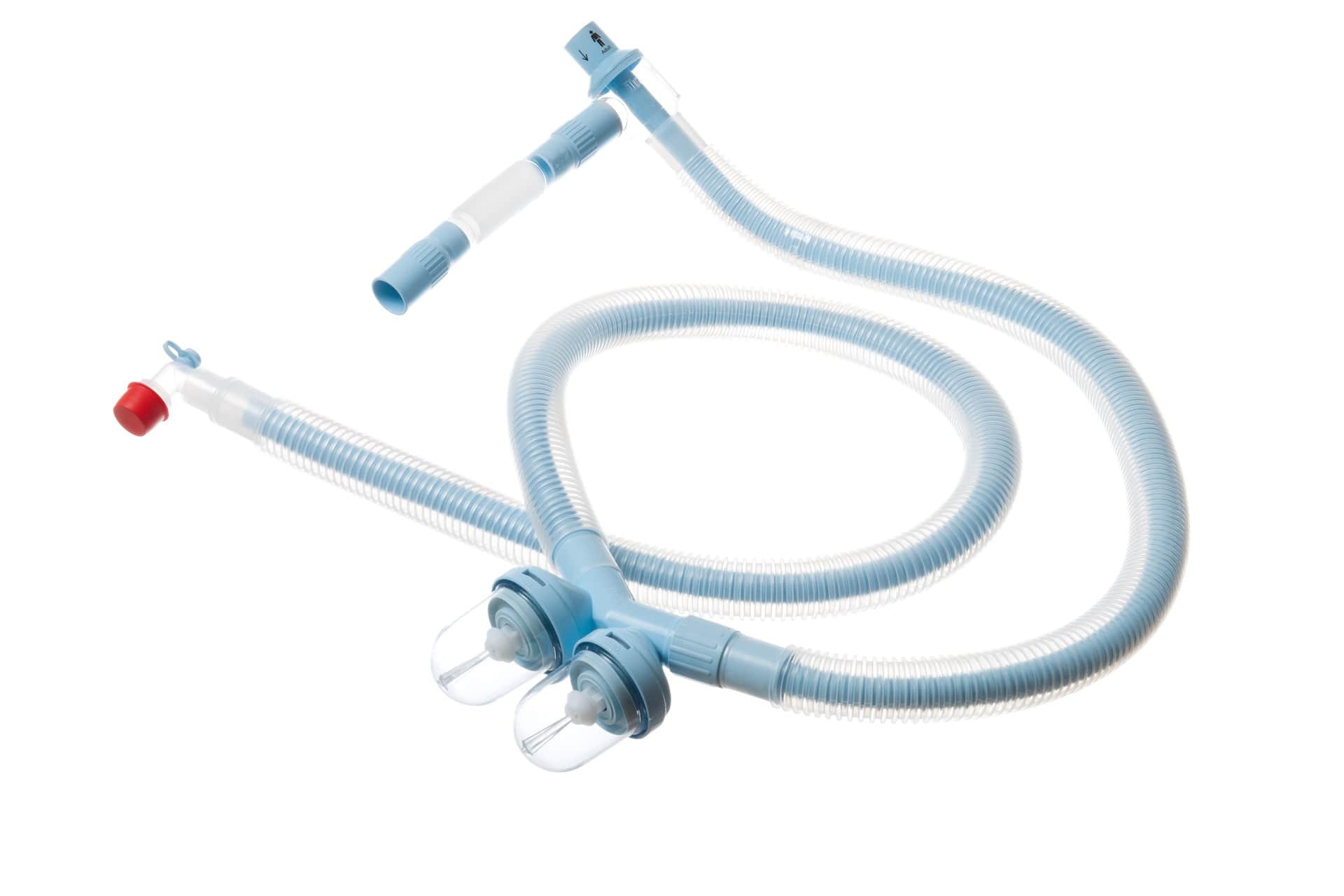
An anaesthesia breathing circuit is an essential medical device used during surgery to deliver oxygen and anaesthetic gases to a patient and to remove carbon dioxide from the body. It forms the connection between the anaesthesia machine and the patient’s airway, allowing controlled and continuous breathing support while the patient is unconscious.
During general anaesthesia, patients cannot breathe normally on their own. The breathing circuit ensures that the correct mixture of oxygen and anaesthetic gases reaches the lungs safely. At the same time, it helps eliminate exhaled carbon dioxide, preventing dangerous buildup in the body. Because of this dual function, the breathing circuit plays a critical role in maintaining life during surgical procedures.
A typical anaesthesia breathing circuit includes several important components. These usually consist of breathing tubes, a reservoir bag, valves that control airflow direction, connectors, and sometimes filters to reduce infection risk. Each part works together to maintain proper gas flow, pressure, and ventilation for the patient.
There are different types of anaesthesia breathing circuits used in hospitals. Common examples include the circle breathing system, Bain circuit, and Mapleson circuits. The circle system is widely used in modern operating rooms because it allows rebreathing of gases after carbon dioxide removal, which helps conserve anaesthetic agents and maintain stable humidity and temperature. Other circuits may be chosen for children, emergency care, or specific surgical needs.
Safety is extremely important when using an anaesthesia breathing circuit. Medical professionals must check for leaks, blockages, or malfunction before every procedure. Continuous monitoring of oxygen levels, airway pressure, and patient breathing ensures that the circuit is functioning correctly. Any failure in the system could quickly become life-threatening, which is why strict medical protocols are followed.
Modern anaesthesia breathing circuits are made from lightweight, medical-grade, non-toxic materials. Many are designed for single use to prevent infection, while reusable versions can be sterilized carefully. Advances in design now focus on better infection control, reduced resistance to airflow, improved patient comfort, and compatibility with advanced monitoring technology.
In conclusion, the anaesthesia breathing circuit is a life-supporting pathway that allows safe delivery of anaesthetic gases and oxygen during surgery. Though often unnoticed by patients, it is one of the most critical components of modern anaesthesia care. Its reliability, safety, and continuous development help ensure that surgical procedures remain safe and effective for people around the world.

